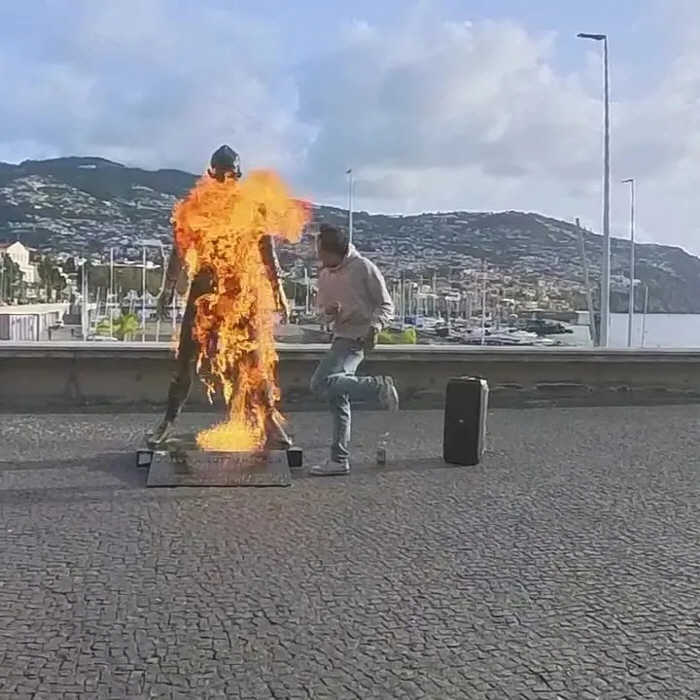
January 20, 2026, shocked the football world with unsettling news. A statue of Cristiano Ronaldo, situated outside the CR7 Museum in Funchal, Madeira, was vandalized in an arson attack. A man poured flammable liquid over the statue, set it on fire, and then shared the act on social media, leaving a message, "This is God's last warning." The video, which showed him dancing to techno music and hurling insults at the monument, escalated the controversy. Portuguese police (PSP) are investigating this incident as vandalism of public property, pursuing a thorough investigation.
This incident transcends mere damage to an artwork and necessitates in-depth analysis concerning the complex facets of 'hero' symbolism in modern football and fandom culture.
A football player's statue is more than just a sculpture; it commemorates extraordinary achievements, dedication to team and country, and symbolizes the unwavering love and pride of fans. Cristiano Ronaldo is rightly regarded as one of the greatest players in football history. In his native Madeira, he is more than a sports star; he is a 'living legend' and a local treasure. The statue, created by sculptor Ricardo Velosa and displayed at the CR7 Museum since 2013, serves as a major tourist attraction in Funchal and represents Ronaldo's illustrious career and the glory of Portuguese football.
Interpreting this incident from a tactical perspective reveals the extreme ramifications of the 'public commodity' phenomenon surrounding football stars. Superstars like Ronaldo garner worldwide attention and affection but also become targets for incomprehensible hatred and criticism. The perpetrator's message, "This is God's last warning," suggests motivations beyond anti-fandom, potentially pointing to certain ideologies, religious beliefs, or expressions of social discontent by attacking a 'heroic' symbol. This unsettling example illustrates that football, beyond a mere sport, can encapsulate social and cultural messages.
Notably, this is not the first time a Ronaldo statue has been embroiled in controversy. A bust at Madeira International Airport became a subject of ridicule due to its likeness, leading to its replacement. Unlike the artistic critiques of the past, this arson is intentionally destructive, highlighting the diverse public views and complex emotions regarding the veneration of heroes, which can manifest in extreme actions.
Fortunately, early reports suggest that despite being temporarily engulfed by flames, the bronze statue suffered no permanent structural damage. However, the implications of this event are significant. It exemplifies the polarization within fandom culture, between fervent support and stark anti-fandom, raising the need to bolster security for public monuments related to sports icons. Furthermore, a thorough exploration of the socio-cultural backdrop of the 'God's warning' message is warranted to ascertain whether this incident is an isolated attack on Ronaldo or a broader expression of societal grievances.
In conclusion, the arson attack on the Cristiano Ronaldo statue reveals the dualism of 'football hero' symbolism, the complexity of fandom culture, and the vulnerability of public art in modern society. Football transcends its status as a sport, evolving into a vast cultural phenomenon, with stars at its core wielding immense influence while also facing unprecedented scrutiny and hostility. It is crucial to remember this dynamic while contemplating the implications of such incidents. With the Portuguese police conducting a meticulous investigation, this incident prompts us to reflect deeply on its message.