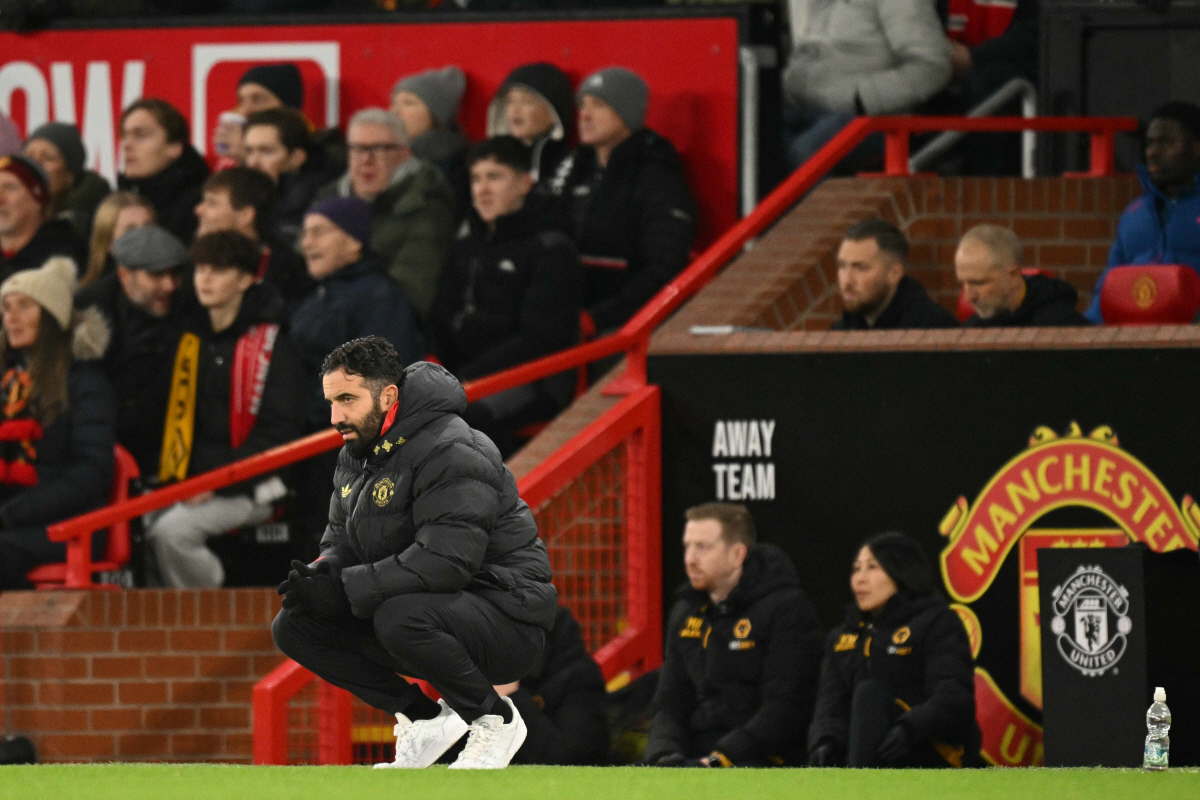
Manchester United has brought an end to its 14-month journey with coach Ruben Amorim. Officially announced on January 5, 2026, KST, the sacking seems superficially justified by the club's rationale of 'lack of progress and evolution,' but deeper tactical and operational issues within the club are thought to have been at play beyond the mere result of finishing 6th in the Premier League. Here, we delve into Amorim's tenure at United to explore whether his dismissal stems from fundamental issues beyond just poor performance.
First of all, Amorim's win rate can be cited as a direct reason for his dismissal. He recorded a win rate of around 38% across all competitions. This is the lowest among Manchester United's formal managers since Sir Alex Ferguson, a clearly disappointing outcome by the standards of a club steeped in tradition like United. The hope among fans and club executives of regaining past glory could only have dimmed under these results.
From a tactical standpoint, Amorim's insistence on a 3-4-3 or similar three-back system was a key point of contention. While his strategy based on three-backs was successful and received attention at Sporting CP, it was limited within the dynamic and tactically flexible environment of the Premier League and modern football. Football Director Jason Wilcox demanded greater tactical flexibility, including a shift to a four-back formation, to which Amorim was not easily accommodating. This rigidity in tactics provided opponents with predictable plans to counter, potentially leading to a decline in the team's performance.
The breakdown in the relationship between the coach and the club’s executives also played a decisive role in Amorim's dismissal. His relationship with top executives, including CEO Omar Berrada and Football Director Wilcox, reached a nadir. Particularly after a match against Leeds United, Amorim publicly stated in a press conference, “I am not just the head coach of Manchester United but the manager,” openly expressing dissatisfaction with his role and authority, which created significant waves. This incident symbolically illustrated the breakdown of trust between the coach and the club, and in modern football, it is difficult to tolerate a coach openly challenging the club’s operational system when collaboration and a shared long-term vision are necessary.
Moreover, public criticism of youth players further deepened internal discord. His criticism directed towards young players such as wing-back Patrick Dorgu countered the club's philosophy of valuing its youth academy and supporting young players' development, which is a traditional aspect of United. This attitude likely fostered unease within the squad and impaired teamwork. The incident where Dorgu liked a social media post criticizing Amorim’s tactics starkly exemplifies the severity of the internal conflict.
The club also viewed Amorim's emotional and inconsistent conduct as harmful. The lack of stable leadership and consistent messaging expected from the helm of a prestigious club was apparent. These composite factors led United executives to conclude that development and evolution could not be expected under Amorim’s leadership.
Now, Manchester United faces yet another pivotal moment. Darren Fletcher is set to assume interim managerial duties, as the club once more seeks a solution to overcome the turbulent post-Ferguson era. Amorim's dismissal can be attributed to a compound of issues beyond poor results, including a lack of tactical flexibility, failure to communicate with top executives, and poor management of a youthful squad. Football fans are watching closely to see what lessons United will learn from this ordeal and whether the club can tread the path of true rebuilding with its next commanding figure.
@ManchesterUnited @RubenAmorim @PremierLeague @FootballNews @TacticalAnalysis