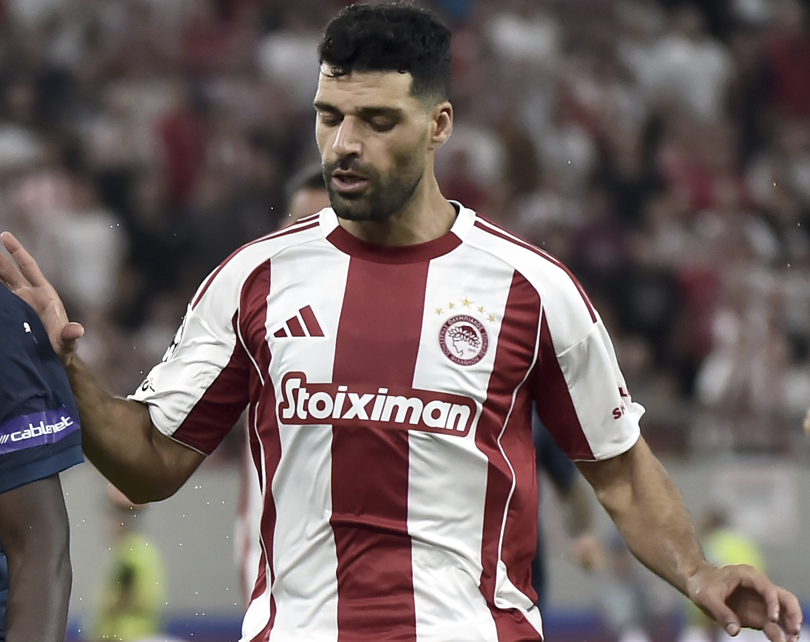
Recently, the incident where Olympiacos' star striker Mehdi Taremi refrained from celebrating after scoring a goal, attributing it to "the situation in his homeland," serves as an important reminder of the deep political realities overshadowing Iranian football beyond just the action of a single player. As a football fan, such news underscores the inextricable link between sports and politics, with Taremi's 'silent celebration' interpreted as a direct show of solidarity with the anti-government protests in Iran, amplifying its impact while highlighting the risks he must endure.
From a tactical perspective, a striker's goal is a pivotal moment that boosts the team's morale and establishes control over the game's atmosphere. An explosive celebration during this time imprints a powerful impression on fans and energizes teammates. However, Taremi's deliberate choice to forgo this opportunity to remain silent underscores his intense resolve to highlight the country's dire situation above personal glory. It is a significant act, not merely an off-field gesture but rather as a socially impactful message utilizing his influence as a sports figure.
Looking at statistics, the Iranian regime's brutal suppression of anti-government protests continues, with restrictions on basic communication like internet and telecommunication. In this context, Iranian players abroad expressing solidarity with their homeland's situation involves more than just a declaration of support; it's a courageous act involving risks such as arrest or threats. The disadvantages they might face upon returning home could severely affect not just their careers but also their families.
In Iran, football has long been entangled with politics. From the national enthusiasm during the 1998 World Cup qualification to the 2010 Iranian team's ‘green wristband’ protest, football often serves as a significant vehicle for political messages. Taremi's recent actions align with this historical trajectory. During the 2022 World Cup, Taremi led 'silent protests' by refusing to sing the national anthem, echoing later in January 7th by the Iranian U-23 team, indicative of a spreading form of resistance.
In the past, legendary Iranian footballers like Ali Daei and Voria Ghafouri have faced retaliation or disadvantages for political statements. Taremi has consistently shown attention to social issues, critiquing the conditions in Iranian stadiums. This suggests that players are not only focused on the game but are deeply contemplating their social responsibilities and roles.
These circumstances can exert immense psychological pressure on athletes, potentially affecting performance. Yet, they choose not to remain silent, indicating the profound love and responsibility Iranian players feel toward their country, coupled with their desperate hope for their message to reach the international community. Even former Iran national team coach Carlos Queiroz expressed solidarity by quoting a Tehran-origin poet, highlighting the widespread movement within and outside Iranian football.
Mehdi Taremi's 'silent celebration' goes beyond a mere goal scene, showcasing the complex political milieu in Iran and the reality for footballers courageously raising their voices. Though their acts of solidarity come with significant risks, they provide comfort and hope to their fellow citizens facing dire circumstances. Continued attention and support for Iranian footballers' courageous stance are essential.