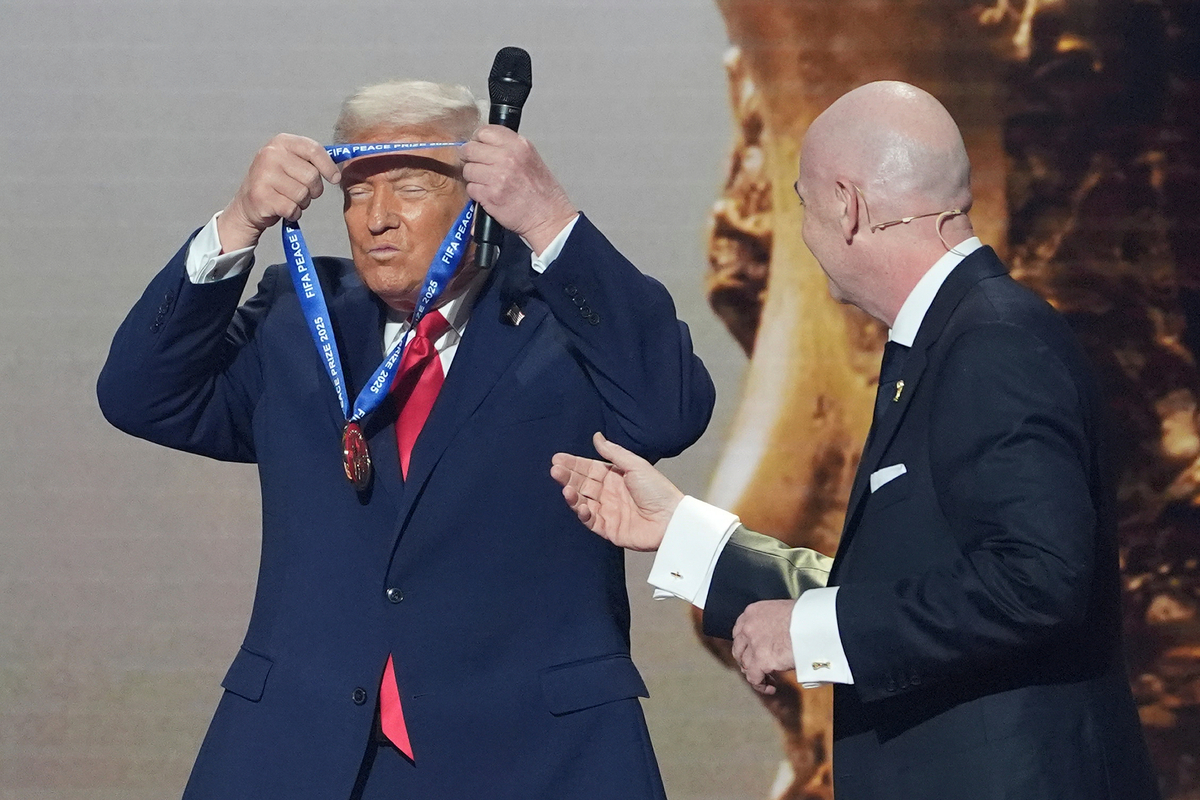
Dear football fans and fellow analysts in the football community, hello to you all. Today, rather than analyzing tactical movements on the ground or individual performances of players, we aim to delve deeply into severe governance issues surrounding the football world. Specifically, we wish to address the significant controversy shaking FIFA ahead of the upcoming 2026 North American World Cup, namely the widespread impact of FIFA President Gianni Infantino awarding former U.S. President Donald Trump with the 'FIFA Peace Award'.
This issue moves far beyond a mere ceremony incident, prompting fundamental questions about FIFA's core values and future. On December 5, 2025, during the draw for the 2026 North American World Cup in Washington D.C., President Infantino awarded Trump with the 'FIFA Peace Award.' However, there was no transparent selection criteria or formal council approval process, which has reportedly spread a 'deep sense of bewilderment' among FIFA's middle and senior management. This can be seen as a direct violation of the principles of reform and transparency long emphasized by FIFA.
From a tactical perspective, the 'tactics' of a football organization extend beyond managing games to upholding organizational values and achieving long-term visions. Infantino's decision resembles a coach changing a crucial tactic without prior agreement in an important match. Predictably, it led to chaos and criticism, with transparency watchdogs like FairSquare taking the matter to the FIFA Ethics Committee, alleging Infantino's unilateral creation and awarding of the prize violated FIFA's political neutrality regulations. This underscores why FIFA needs to be extremely cautious about being embroiled in political controversies.
Moreover, the controversy did not end there. After the ceremony, military and diplomatic actions by Trump's former administration, such as airstrikes on Venezuela and attempts to arrest and extradite former Venezuelan President Nicolás Maduro, further intensified the controversy. This situation highlights how detached FIFA's intended message of 'peace' through this award is from reality. Similar to how players' training performances don't always translate into actual gameplay results, FIFA's rationale seems to be losing its persuasive power among the public.
Internal sources express strong concern over the risk of reputation damage to FIFA stemming from this situation, anticipating a sensitive and challenging period leading up to the 2026 World Cup in the U.S. The World Cup is a global festival and FIFA's most crucial asset, and prolonging this controversy could negatively impact the atmosphere and commercial success of the event. It is akin to a key player lowering team morale due to off-field issues.
Interestingly, despite the criticism, FIFA has publicly defended the award decision, reaffirming strong support. They mentioned opposition leader María Corina Machado in Venezuela gave her Nobel Peace Prize medal to Trump as part of this defense. However, this argument ironically underscores the fundamental issues of opaque selection processes and compromised political neutrality, exacerbating these issues rather than mitigating them—much like a coach making unconvincing excuses for a lost game, potentially amplifying public distrust rather than regaining confidence.
In conclusion, the controversy over the FIFA Peace Award starkly highlights not only Infantino's autocratic decision-making approach but also the lack of a checks-and-balances system within the organization. To ensure the successful hosting of the 2026 North American World Cup, FIFA needs to develop a more cautious and transparent crisis management strategy. It is time to present a clear vision of how to preserve the pure values of football and maintain political neutrality—not just defend their decisions. Failing to do so could record this controversy as a fatal tactical error hindering the successful hosting of the World Cup.