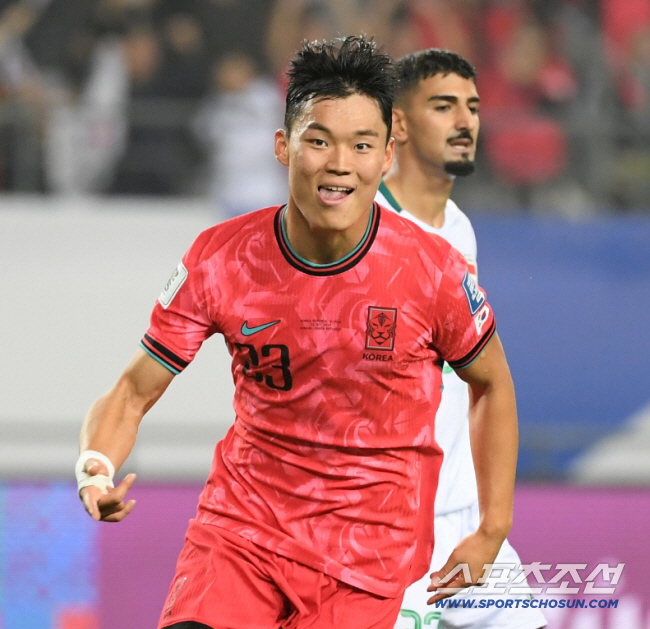
Recently, some disappointing news reached Korean football fans. Emerging as 'the next-generation striker of Korean football,' player Oh Hyun-Gyu's challenge to the European stage has hit another roadblock. Following a failed attempt to enter the Bundesliga, his potential move to the English Premier League (EPL) has also fallen through, marking a critical crossroads in his career. Notably, there were concrete rumors about his transfer to London's Fulham, but it ultimately concluded with the club opting to sign a U.S. national team player instead, highlighting significant implications. Let's delve into an in-depth analysis of this situation.
From a tactical perspective, Fulham’s decision to choose an American international over Oh Hyun-Gyu isn’t just about individual skill levels; it’s the result of complex factors such as synergy with team tactics and market strategy. Under manager Marco Silva, Fulham pursues a system of intense pressing and swift transitions. The striker is expected not only to score goals but also to initiate the forward press, connect with teammates, and maintain diligent movements during defensive transitions. While Oh Hyun-Gyu has shown aggressive movements and focus in the penalty box during his Celtic days, doubts might have arisen regarding his ability to fully meet Fulham’s tactical demands in the world’s most competitive league, the EPL.
Statistics reveal that the value of a striker in modern football is judged on more than just the number of goals. Various metrics such as pressures per game, duel success rates, and chance creation prowess play pivotal roles in determining a player’s value. Although specific details about the profile of the U.S. international player Fulham signed in Oh Hyun-Gyu's place aren't disclosed, one can conjecture that this player possesses a playing style and stat profile more aligned with Fulham’s tactical system. For instance, data indicating a broader activity range or high efficiency in specific positions might have stood out. This scenario underscores how meticulous and multifaceted European clubs are in evaluating players during the transfer market.
For Oh Hyun-Gyu, this failed transfer represents a significant barrier labeled as a ‘major crisis.’ Having already tasted defeat with a missed Bundesliga opportunity, facing another setback right at the doorstep of his EPL dream is certainly disheartening. Still, frankly speaking, this serves as a glimpse into the realistic challenges that ‘next-generation Korean strikers’ frequently encounter when attempting to break into the European big leagues. European leagues are structured with each team having a distinct tactical philosophy and clear criteria for player selection, making it challenging to secure a transfer based solely on talent alone. Particularly for the striker position, where assuming the goal-scoring responsibility is crucial, a precise match between a manager’s tactical judgment and a player's individual qualities is essential.
Given his playing style, Oh Hyun-Gyu excels in determined pressing, physical duels, and creating scoring opportunities with bold shooting. However, the EPL’s demand for rapid tempo, refined off-the-ball movements, and organic switching play with teammates are areas flagged for improvement. His traditional striker profile, compared to a versatile winger or second-striker, might pose a restriction amid the flexible tactical evolutions of modern football.
The Fulham transfer setback could provide Oh Hyun-Gyu with an opportunity to maximize his strengths and address his weaknesses. Rather than solely focusing on gaining entry to a big league, a more strategic approach of carefully selecting a league and team that best complement his playing style is essential. Playing consistently in a setting like the Scottish Premiership could bolster his scoring touch and tactical understanding before finding a team that implements a game plan optimized for him could be a wise move. Recent performances, such as those at Celtic, were certainly impressive, but this situation indicates another level of development is required to prove his caliber in higher-tier leagues.
In conclusion, while Oh Hyun-Gyu's failed transfer to Fulham brings personal regret, it also prompts a rethinking of what preparation and strategy are needed for Korean players carrying the future of Korean football on the European stage to succeed. Talent alone is insufficient; precise tactical understanding, meeting team requirements, and establishing long-term career plans are imperative. This crisis, if leveraged as a stepping stone, could lead to Oh Hyun-Gyu emerging stronger, and his future moves are thus eagerly anticipated.