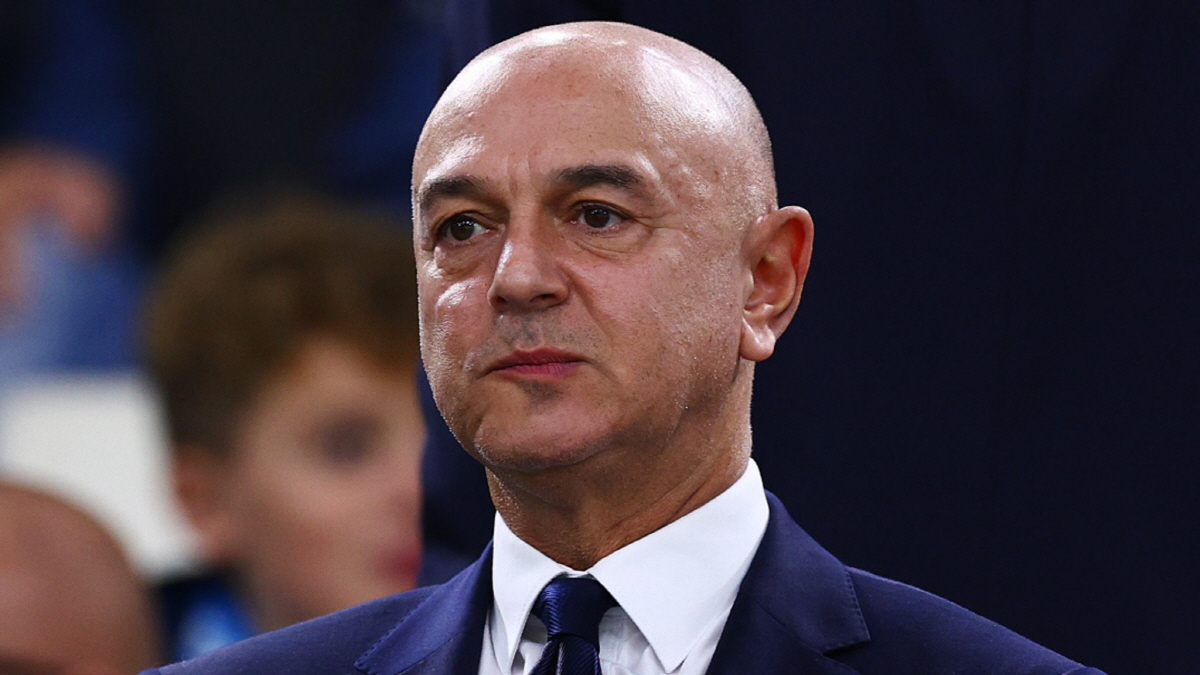
Hello, I'm a football columnist engaging with fans through in-depth football analysis. Today, I will delve into intriguing rumors following the resignation of Daniel Levy, the long-time chairman of Tottenham Hotspur, and discuss how our very own Son Heung-Min is at the center of these stories. While it may appear as a simple change in management, there's an underlying complexity involving club valuation and the intricate dynamics of modern football business.
Daniel Levy, who has been overseeing Tottenham's management for nearly 25 years, played a pivotal role in establishing the club as a formidable force in the Premier League. The formal announcement of his resignation on September 4, 2025, came as a surprise to many fans. However, what's gained more attention is the speculation about the sale of his club shares, with astronomical profit expectations of $2 billion. Central to this rumor is the assertion that Son Heung-Min's performance played a decisive role in potentially realizing these remarkable profits.
Still, a cooler analysis of the share sale rumor and the $2 billion profit expectation seems necessary. So far, trusted mainstream media outlets have not confirmed any actual sale of Levy's stake in Tottenham nor the $2 billion profit expectation. Instead, according to the club's official announcement, "there will be no change in the ownership or shareholder structure" following Levy's resignation. This implies that a share sale hasn't occurred yet, or at least no significant share transaction has taken place.
Why then has this story emerged? The background lies in Tottenham's club valuation and Levy's shareholding structure. It is estimated that Levy and his family indirectly own about 25-26% of Tottenham shares through ENIC. In 2025, Forbes estimated Tottenham's value to be around $3.3 billion to $4 billion. For Levy's share value to reach $2 billion (around 1.5 billion USD), Tottenham's total value would need to be nearly $6 billion. This is significantly higher than current major valuation assessments of the club, hence one should note that the $2 billion profit speculation is quite distant from the objective assessment of the club's current value.
Yet, it is not easy to dismiss these rumors as utterly groundless. The key aspect to notice is Son Heung-Min's involvement. Tactically speaking, Son is not just a goal-scoring forward but a crucial asset elevating Tottenham's global brand value. His exceptional individual skills, consistent goal-scoring ability, and historic achievement as the Premier League top scorer have engraved the name Tottenham in the hearts of football fans worldwide, far beyond Asia. Particularly in the Asian market, his overwhelming popularity and subsequent sponsorship attraction, increased merchandise sales, etc., are effects on revenue growth that are difficult to quantify.
The presence of such a global star player significantly enhances the club's 'intangible asset' value. Beyond achievements on the field, they boost the club's recognition and allure, contributing to forming higher corporate value in the long term. Even though the specific figure of $2 billion remains currently unproven speculation, the analysis that Son Heung-Min has played a pivotal role in enhancing Tottenham's value over the years is persuasive. His commercial value coupled with his sports success has maximized the club's overall appeal, potentially acting as a powerful bargaining chip in future sale negotiations.
In conclusion, there are still many unverified aspects regarding Daniel Levy’s resignation and the share sale rumors. Nonetheless, these rumors offer glimpses into the complex facets of club management beyond mere wins and losses in modern football. It also once again highlights how one world-class star player like Son Heung-Min can immensely impact a club's financial value. It will be interesting to see if there are actual changes in Tottenham's ownership structure in the future and how Son's 'hidden value' is evaluated in the process.
@SonHeungMin @Tottenham @DanielLevy @PremierLeague @FootballBusiness