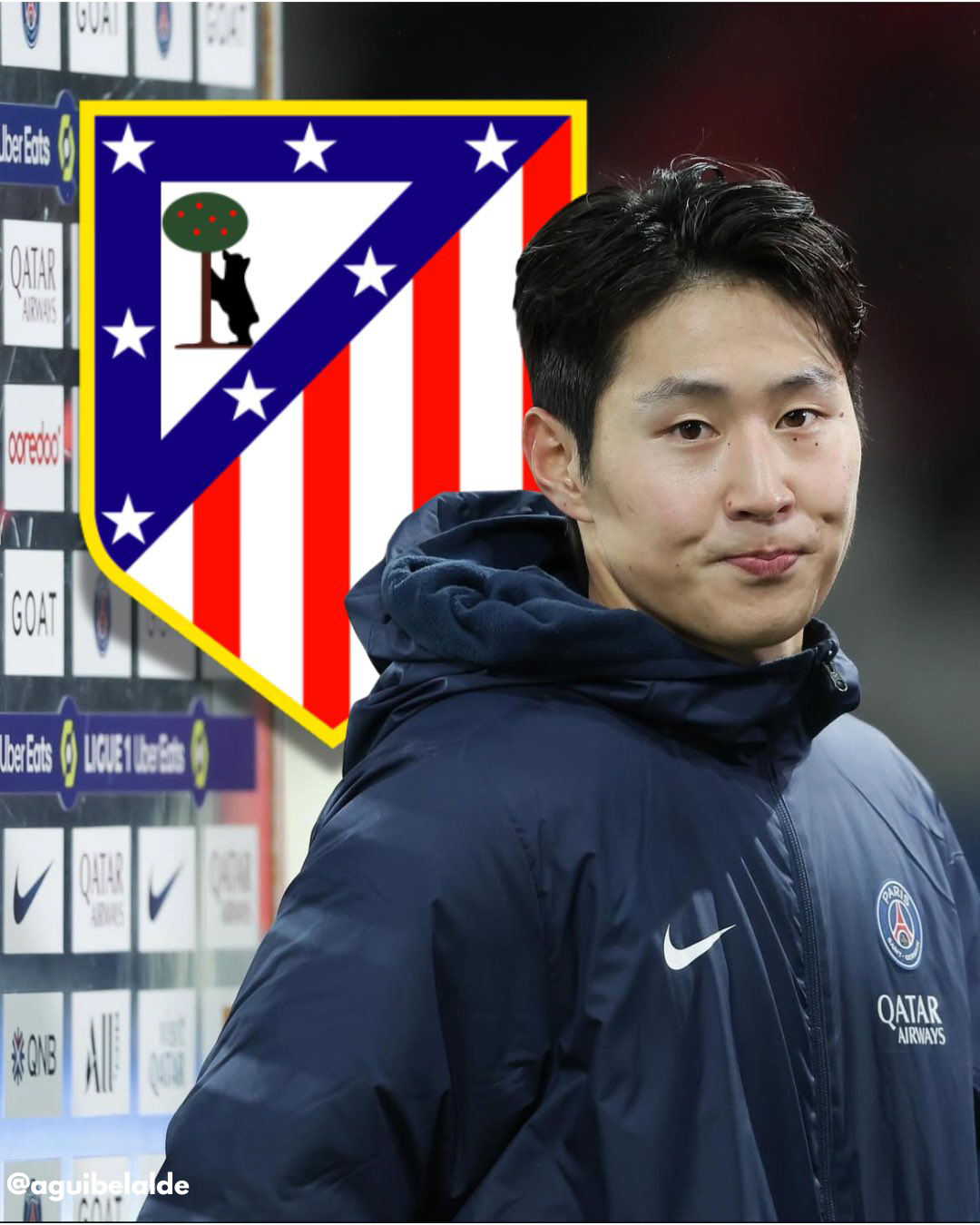
News has emerged that the rumored transfer of player Lee Kang-in to Atletico Madrid has ultimately fallen through. This development, which has captured the attention of many football fans, is causing quite a stir in the football world. More than a failed transfer, the situation involves complex factors that merit a detailed analysis, especially since Atletico Madrid abandoned the pursuit and Lee Kang-in also expressed a desire to stay with his current team, PSG.
The key highlight is Diego Simeone's decision. According to reports, Simeone did not prioritize Lee Kang-in as a top acquisition. This is interpreted as a belief that Lee's style of play did not align perfectly with Simeone's focus on strong defensive organization and counterattack-oriented tactics. While Lee Kang-in possesses exceptional ball control, sharp passing, and creative playmaking abilities, Simeone likely prioritized players with a higher defensive contribution or those specialized in creating direct scoring opportunities. Reviewing Atletico Madrid's tactical moves over the recent seasons shows a heavy emphasis on midfield pressure and activity, clearly indicating Simeone's tactical priorities.
Another engaging aspect is Lee Kang-in's change in stance. Previous reports suggested that he wanted to return to La Liga, but recent information indicates that Lee wishes to remain with PSG. This suggests a feeling of stability and growth potential at PSG. Training with world-class players and participating in significant matches like the Champions League significantly impacts personal development. Despite the fierce competition for starting positions, it is likely that Lee Kang-in feels he is growing and finding his role at PSG. A deeper analysis is needed on what role Lee is playing under manager Luis Enrique's tactics and what growth he is experiencing in that role.
There is also speculation that Atletico Madrid's decision to withdraw from the transfer could be seen as 'giving up on the Korean market.' This extends beyond player acquisition and ties into the club's global marketing strategy. Lee Kang-in holds an enormous fan base in Korea, and his acquisition could have significantly boosted the club's recognition and product sales in the Asian, particularly Korean, market. Nonetheless, Simeone's tactical judgment took precedence, showing that Atletico Madrid valued improvement in team performance more than short-term commercial benefits. The evaluation might be that long-term team success would yield more substantial marketing results.
From a tactical viewpoint, Atletico Madrid is likely focused on acquiring midfield or attacking assets that fit Simeone's solid philosophy. This demonstrates a commitment to maintaining tactical consistency and focusing on the playing style preferred by the manager. In contrast, Lee Kang-in's choice to remain at PSG suggests he opted for growth amidst competition. There is increasing interest in what role he is assigned at PSG and what tactical value he will prove. This transfer failure reflects a strategic decision for both sides, making it important to monitor their respective successes in the future.
In conclusion, the failed transfer of Lee Kang-in to Atletico Madrid goes beyond just a failed player transfer, emerging from a complex interplay of managerial tactical philosophy, personal vision, and strategic club decision-making. For Lee Kang-in, it presents a chance to fortify himself at PSG, while for Atletico Madrid, it solidifies the tactical direction under Simeone. The future paths of the two teams and Lee Kang-in are expected to capture the attention of football fans in Korea and around the world.
@LeeKangin @AtleticoMadrid @PSG @Simeone