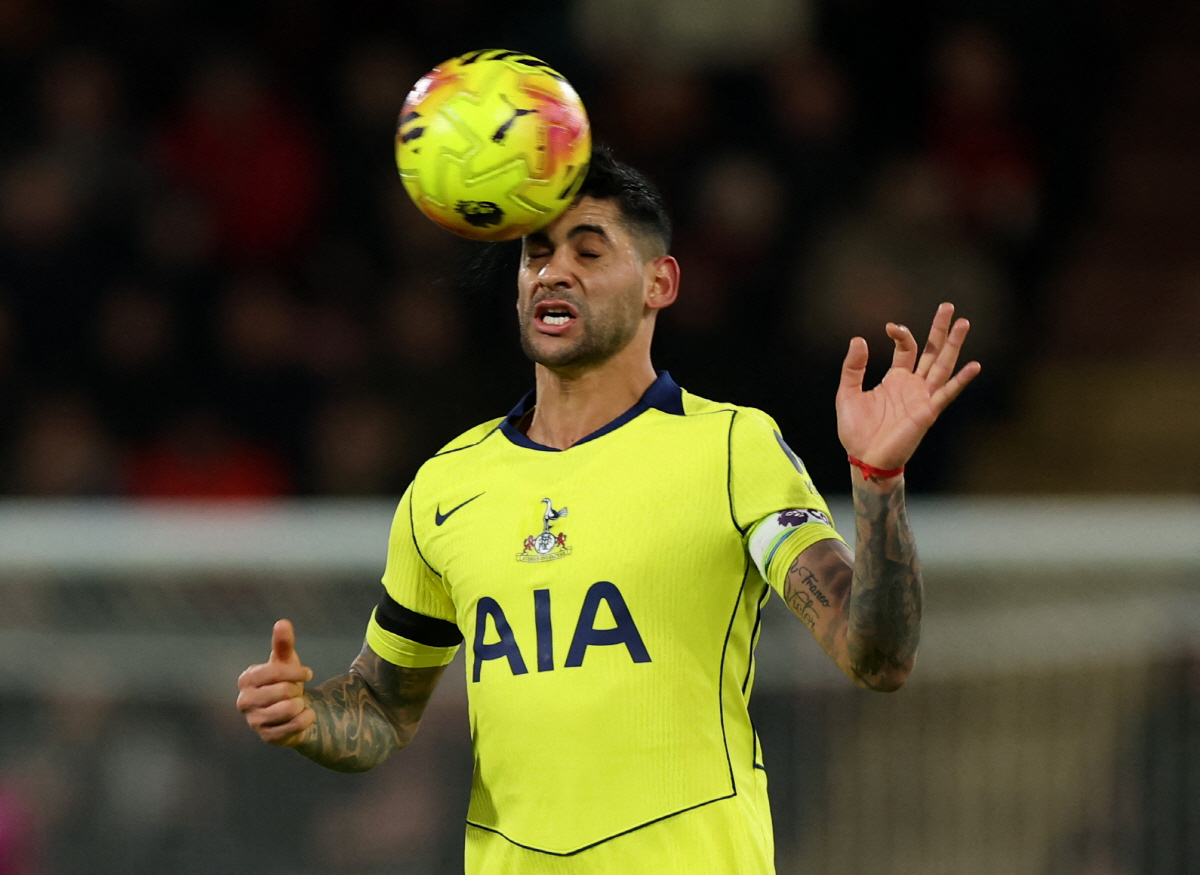
Recently, observing Tottenham Hotspur's performance ignites a sense of disappointment. The team has slid down to 14th place in the Premier League and has failed to secure a win in their last three matches, signaling a challenging period. Amidst this, team captain Cristian Romero has exacerbated the team’s crisis by receiving yet another suspension. This issue extends beyond an individual player's problem and significantly impacts the team’s overall tactical stability and leadership, warranting thorough analysis.
Romero was sent off during a Premier League match against Liverpool on December 20, 2025, after receiving a second yellow card and a red card. Specifically, issues arose from his kick against Ibrahim Konate and a confrontational and aggressive attitude towards referee John Brooks, even after being ordered off the pitch. Consequently, despite already serving a one-match automatic suspension in the Palace game, he faces an additional one-match suspension and a £50,000 fine from the FA. This will lead to his absence in the FA Cup third-round match against Aston Villa (January 10, 2026), posing a significant blow to Spurs already struggling with defensive instability.
From a tactical standpoint, Romero's absence could be detrimental to Tottenham's defensive line. Beyond his remarkable defensive prowess, he plays a crucial role in build-up play as a deep-lying playmaker, contributing to the attack's initiation. His strong man-marking and aerial prowess are essential in thwarting opposition attacks, particularly under Postecoglou's system that employs a high defensive line. Romero’s quick decision-making and coverage are vital, and his absence risks creating psychological and tactical burdens, affecting not only the upcoming FA Cup match against Aston Villa but also subsequent league matches. Reviewing statistics highlighting the team’s struggle to achieve defensive solidity underscores the severity of Romero's absence.
Recently, Tottenham's performance suggests the team is losing confidence and organizational coherence. While issues with midfield dominance and attacking efficiency persist, frequent defensive errors are directly contributing to defeats. In such circumstances, when a player holding a pivotal captaincy role repetitively engages in behavior harmful to the team due to poor emotion management, it can demoralize the squad and negatively influence players. Tottenham's coach, Thomas Frank, has stated his intent to retain Romero as captain, which can be interpreted as a belief in Romero’s leadership potential. However, this decision has drawn criticism for entrusting crucial captaincy duties to a player unable to control his temperamental tendencies.
Romero's apology via social media, expressing that "others within the club need to speak up during tough times," is also a point of interest. This comment hints at complex internal issues or team dynamics, shedding light on a leadership crisis transcending individual disciplinary matters. A true leader exemplifies conduct during difficult times and stabilizes the team. Yet, Romero’s behavior ostensibly destabilizes the team further, attracting relentless criticism.
In conclusion, Romero’s recurring suspensions amount to more than short-term strategic losses for Tottenham, posing significant questions about the long-term leadership and team culture. Given that the upcoming FA Cup match against Aston Villa must proceed without Romero, Coach Frank needs to devise new tactical solutions to stabilize the defense and uplift team morale. Additionally, it is time for Romero to deeply reflect on the impact of his actions on the team and assume the responsibility befitting a genuine captain. Whether Tottenham can seize this crisis as an opportunity to emerge as a more resilient team or continues its current descent will be closely observed in their forthcoming endeavors.
@Tottenham @CristianRomero @FA_Cup @PremierLeague @ThomasFrank @FootballNews