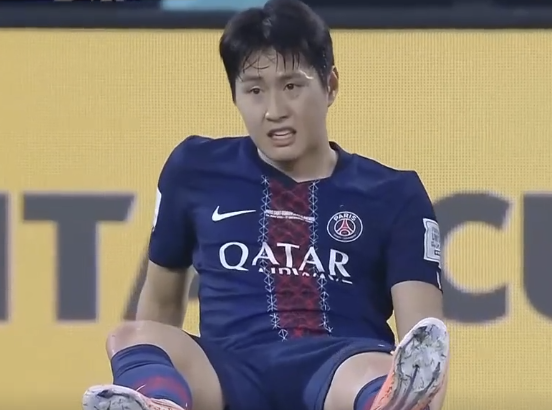
Paris Saint-Germain (PSG) star midfielder Lee Kang-in's uncertain return by early January 2026 brings disappointment to many football fans. Initially expected to return in a few weeks, his absence prolongs as he remains on the injury list despite resuming team training. We delve into how this situation affects PSG's tactical operations and Lee Kang-in himself.
Lee Kang-in’s injury occurred on January 18, 2025, during the 2025 FIFA Intercontinental Cup final against CR Flamengo. Suffering a left thigh injury after a harsh tackle, he was substituted in the 35th minute. PSG announced he'd miss "a few weeks," but by early 2026 January, he hasn't fully returned to team training. French media reports indicate that despite PSG resuming training after a brief break, Lee Kang-in remains under medical assessment with other injured players like Matvey Safonov, significantly reducing his chances of playing against Paris FC on January 5, further casting doubt over his return time.
From a tactical standpoint, Lee Kang-in's prolonged absence poses considerable challenges for PSG. Integral in manager Luis Enrique's tactics, Lee played critical roles as a central midfielder and a wing playmaker. His precise left-foot passes, broad vision, creative dribbles, and pressing evasion have been crucial in PSG's attack. His killer pass ability and role as a set-piece taker are hard to replace, and his absence could lead to less creative play and difficulties breaking down dense defenses. It could also affect ball possession and transition in midfield.
While PSG has utilized other midfielders like Vitinha, Warren Zaire-Emery, and Manuel Ugarte, replicating Lee's unique playmaking skills and attacking flair is challenging. His absence impacts the team's attacking tempo and rhythm, burdening other attacking players. The manager might seek tactical adjustments to distribute Lee's responsibilities, or grant creative freedom to specific players. Options include increasing wing attackers' central incursions or stabilizing build-up play with tempo control.
Statistics show Lee consistently contributed to PSG's attack with a high pass success rate and frequent chance creation before his injury. His absence hampers the team's offensive route diversity and flexibility. This points to possible complex tactical challenges for PSG in the forthcoming Champions League and league title races. Thigh injuries often carry high relapse risks and require considerable recovery time, demanding cautious management by medical and coaching staff. Emphasis should be on complete condition recovery rather than premature return, considering the player's long-term career.
The injury prolongation represents a crucial trial for Lee himself. Injuries during significant seasons can disrupt match rhythm and delay return to top form. However, considering his positive attitude and professionalism, he’s expected to come back stronger from this period. Meanwhile, PSG must play crucial matches without Lee, marking a significant test for the team's season strategy. We hope for his swift recovery and a successful return to the field.
@LeeKangin @PSG @ParisSaintGermain @FootballNews @InjuryAnalysis