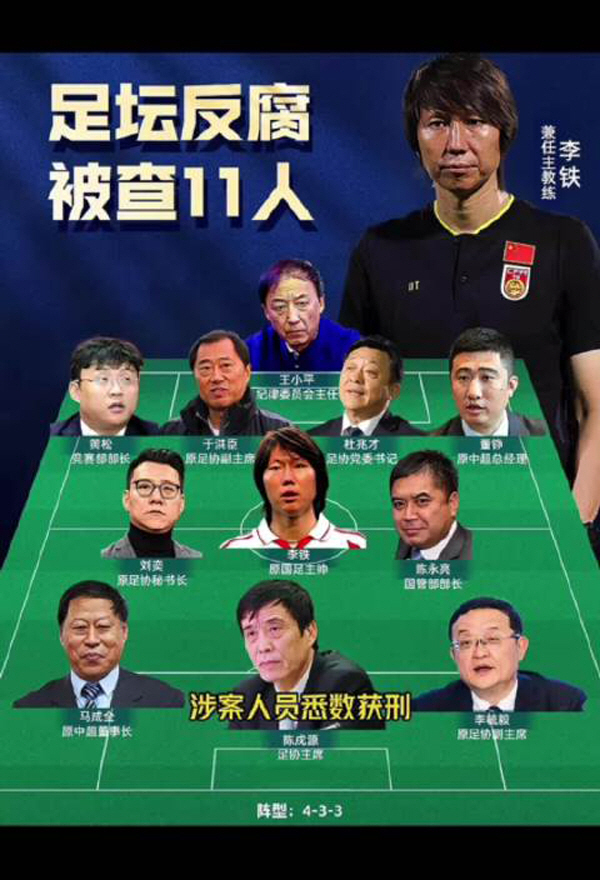
Hello, football fans! I'm a South Korean football analyst and blogger. On January 29, 2026, shocking news once again shook the professional football scene in China. In connection with match-fixing and corruption, a second wave of disciplinary actions was announced, the scale and content of which are beyond belief. This not only brings to light the chronic issues within Chinese football but also presents a profound dilemma regarding its future path.
According to the recent announcement, as many as 73 individuals have been permanently banned from the football industry. This figure is alarming in that it doesn't pertain to any single match but rather highlights a widespread chain of corruption. Although the identities of those involved aren't specifically detailed, it's expected that players, coaches, referees, and club officials across various domains are included. This large-scale permanent ban implies exclusion not only from playing careers but from all football-related occupations, causing massive dents in both personal lives and the overall trust in Chinese football.
Particularly noteworthy is that one of the prestigious clubs in the Chinese Super League, Shanghai Shenhua, received a hefty penalty with a 10-point deduction. A 10-point deduction can significantly impact league standings in professional football. From a tactical viewpoint, starting the season with a 10-point deficit or having it imposed mid-season could fundamentally disrupt the team's strategy and operations. The tactical preparations and morale of Shanghai Shenhua's players will inevitably suffer, leading not only to weakened league competitiveness but also to significant disappointment among fans.
The fact that this new wave of sanctions follows approximately 500 days after previous major penalties displays that China's football issues are not isolated incidents but deep-rooted structural problems. Historically, Chinese football has faced numerous match-fixing scandals and repeatedly promised to prevent recurrence through strong sanctions. However, this second wave of punishments serves as a sobering reminder of the inadequacy of those efforts. Globally, such repeated large-scale sanctions in quick succession are rare, suggesting it's time for the Chinese Football Association and league administrators to implement much more robust and fundamental reforms.
This situation poses inevitable long-term adverse effects on the development of Chinese football. First, trust in the league's integrity and transparency will plummet. Investors might hesitate to commit in such uncertain environments, potentially leading to worsening financial health of the clubs. Second, there are concerns about lost motivation among young prospects. Young players choosing the path of a football career might feel disheartened by such corrupt realities or even succumb to illegal temptations. Lastly, China's international standing could take a hit. Chinese football, which aspired to World Cup appearances through significant investments, risks becoming a target of international ridicule due to such scandals.
This catastrophe should act as a critical moment for self-reflection within Chinese football. It shouldn't just end with punishments; concerted efforts towards building transparent management systems, fortified ethical education, and heightened awareness among players and officials are imperative. Correcting the underpinning of teams and the league is as crucial as tactical changes from managers. Without it, another wave of sanctions might arise in less than 500 days. As a football fan, it's essential to observe with both concern and hope, how Chinese football will navigate through this crisis.